Pharmaceutical Medical equipment refers to the specialized tools used to develop, manufacture, test, store, and deliver medicines safely. It includes tablet presses, capsule fillers, fluid-bed dryers, sterile filling lines, laboratory analyzers, temperature-controlled refrigerators, and packaging inspection systems. Each device supports a specific stage, from weighing active ingredients to checking a sealed vial for defects. The equipment may look industrial, yet small details matter. A damaged gasket can affect cleanliness. An unstable sensor can distort test results.
Reliable Pharmaceutical Medical equipment must meet documented quality requirements and support consistent performance. Manufacturers typically evaluate materials, calibration records, cleaning procedures, software controls, and maintenance history. In regulated facilities, qualification and validation provide evidence that equipment works as intended. Traceability is equally important. Operators should be able to identify who used a machine, when it was cleaned, and which batch it processed. These records help protect patients and guide responsible investigations.
The term is broad.
Not every machine has the same risk level. A storage cabinet and a sterile filling system demand different controls, training, and monitoring. Practical experience also reveals an uncomfortable truth: advanced equipment cannot replace careful procedures or competent staff. Automation may reduce errors, but it can create new ones when settings are misunderstood. For this reason, buyers should compare technical specifications, service support, user training, compliance documentation, and total operating costs. A credible assessment should rely on recognized standards, qualified engineers, validated data, and transparent supplier information. Performance claims still require verification in the facility where the equipment will operate.
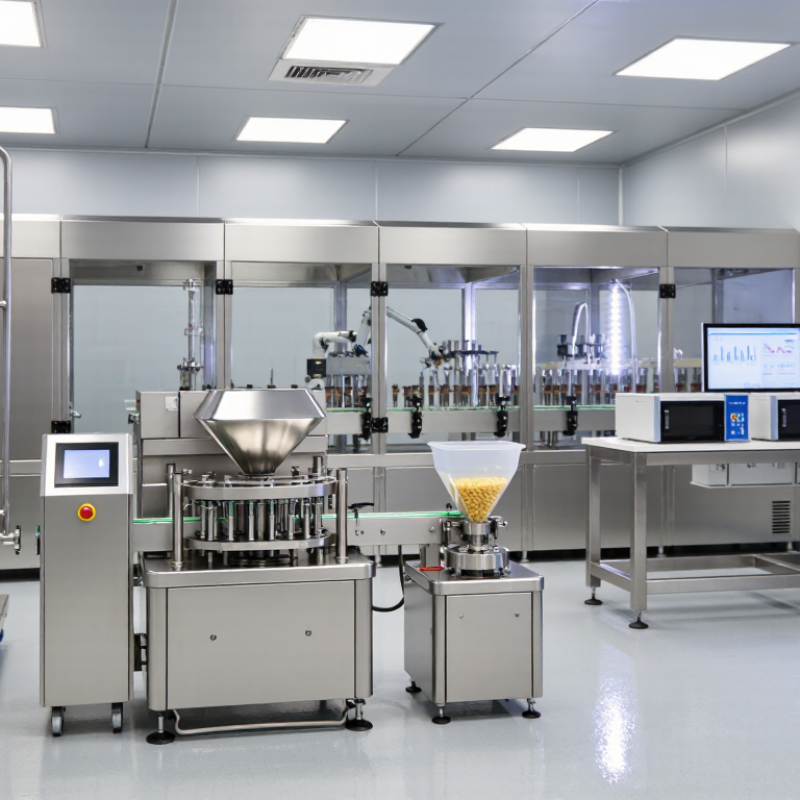
Pharmaceutical medical equipment includes machines and instruments used to produce, process, test, store, and handle medicines. Its scope is wider than laboratory tools alone. It may include mixing vessels, tablet presses, filling systems, filtration units, temperature monitors, cleanroom equipment, and stability chambers. Some equipment supports production directly. Other devices protect product quality through measurement and controlled storage.
In practice, every critical device needs a clear purpose, operating range, and maintenance history. Calibration confirms whether a balance or pressure gauge gives dependable readings. Validation shows that a process repeatedly performs as intended. Data records should remain traceable, readable, and protected from unauthorized changes. Staff also need training, because even accurate equipment can produce poor results when used incorrectly. This sounds obvious. It is often overlooked.
Tips: Check contact surfaces for cleanability, review calibration dates, and record unusual noise, heat, or vibration. Ask whether the equipment fits the process, not merely whether it works. Definitions can feel untidy here. A storage unit may support pharmaceutical production without directly touching the medicine. That boundary deserves careful review. Equipment selection should consider contamination control, material compatibility, energy use, emergency access, and long-term servicing. A practical assessment may reveal limitations that a technical brochure does not show.
What Is Pharmaceutical Medical Equipment?
Main Categories and Their Clinical Applications
Pharmaceutical medical equipment supports diagnosis, treatment, medication preparation, and patient monitoring. Its categories often overlap in clinical practice. Diagnostic equipment includes imaging systems, blood analyzers, and rapid testing devices. Clinicians use them to identify infection, organ dysfunction, and treatment risks. The World Health Organization reported global health spending of US$9.8 trillion in 2021, equal to 10.3% of global economic output (WHO Global Health Expenditure Report 2024). This scale reflects growing demand for dependable clinical infrastructure.
Monitoring equipment includes vital-sign monitors, infusion controllers, and specialized bedside sensors. These devices help staff observe oxygen levels, pressure, temperature, and medication delivery. Therapeutic equipment supports respiratory care, dialysis, rehabilitation, and controlled drug administration. In a hospital room, accuracy matters. A small flow-rate error can change exposure to a medicine, especially for children or intensive-care patients. Clinical teams must combine device readings with professional judgment. Numbers can mislead.
Laboratory and pharmaceutical-processing equipment includes mixers, filling systems, cold-storage units, and environmental monitoring tools. They help maintain dosage consistency and product stability. Sterilization equipment also protects patients and staff. WHO reports that about 7 in 100 acute-care patients in high-income countries acquire at least one healthcare-associated infection; the figure reaches 15 in low- and middle-income countries (WHO Global report on infection prevention and control 2022). Equipment selection should therefore consider cleaning access, calibration records, staff training, and local maintenance capacity. Classification is not always clean. A device may be technically advanced yet clinically unsuitable.
Pharmaceutical medical equipment supports the safe preparation, testing, filling, and storage of medicines. Common components include stainless-steel vessels, agitators, pumps, filters, sensors, filling systems, and clean-in-place units. Each part controls a specific risk. For example, a pressure sensor protects the vessel, while a conductivity probe checks cleaning performance.
Operating principles depend on controlled movement, measurement, and protection. Mixing systems create uniform concentration through calculated agitation. Filtration removes unwanted particles or microorganisms. Filling machines deliver precise volumes through calibrated nozzles. Clean-in-place systems circulate water, detergent, and purified rinsing fluid through internal surfaces. Temperature, pressure, flow, and humidity are continuously monitored.
The IQVIA Institute’s Global Use of Medicines 2024 report projects global medicine spending will exceed 2.3 trillion US dollars by 2028. That growth increases pressure for reliable equipment and repeatable production. Still, perfect control is difficult. Sensor drift, blocked filters, or poor maintenance can quietly affect product quality.
Tips: Choose equipment with accessible sensors and documented calibration records. Review cleaning coverage with real test data, not assumptions. WHO reports more than two million medical device types across about 7,000 generic groups, showing why equipment selection requires careful risk assessment. Operators should record unusual noise, unstable readings, or delayed alarms. Small warnings matter. A practical weakness remains: automated systems can reduce errors, but they cannot replace trained judgment.
What Is Pharmaceutical Medical Equipment?
Pharmaceutical medical equipment supports drug production, testing, storage, and clinical use. Its safety depends on controlled design and documented manufacturing practices. Equipment may include filling systems, sterilizers, laboratory analyzers, infusion devices, and temperature monitoring units. Each product needs a clear intended use before engineers select materials or components.
Manufacturers commonly follow ISO 13485 for quality management and ISO 14971 for medical device risk management. Pharmaceutical production equipment may also require good manufacturing practice controls. These controls cover cleanroom conditions, contamination prevention, process validation, and personnel training. Every critical instrument should have calibration records, maintenance history, and traceable identification. Stainless steel surfaces need suitable finishes, especially where residues could collect. Software requires verification, access control, and reliable data records. Small gaps matter.
Regulatory requirements vary by country and product classification. Authorities may review design files, performance testing, biocompatibility data, electrical safety, and clinical evidence. Manufacturers should document supplier qualification and control every design change. A replacement gasket can affect sterility or chemical compatibility. That risk is easy to overlook. Production teams must also investigate deviations rather than hide them. No process is flawless. In my experience, accurate records often reveal weak training, unclear procedures, or rushed inspections. Independent audits and real-use testing can expose these problems before equipment reaches patients or production lines. Rules change, so compliance teams should check current regional requirements throughout the product lifecycle.
| Equipment Category | Typical Function | Key Manufacturing Controls | Common Standards or Guidance | Typical Regulatory Evidence |
|---|---|---|---|---|
| Pharmaceutical Processing Equipment | Mixing, granulation, drying, milling, coating, and other operations used to manufacture medicinal products. |
|
Good Manufacturing Practice (GMP); quality risk management principles; applicable equipment qualification guidance | Design qualification, installation qualification, operational qualification, performance qualification, cleaning validation, and batch records |
| Sterilizers and Depyrogenation Systems | Removal or inactivation of microorganisms and, where applicable, bacterial endotoxins from products, components, or equipment. |
|
GMP requirements; applicable sterilization process standards; microbiological control guidance | Cycle development reports, biological or chemical indicator results where applicable, physical monitoring data, and sterilization validation records |
| Aseptic Filling and Isolator Systems | Filling sterile products while protecting the product from microbial and particulate contamination. |
|
GMP requirements for sterile medicinal products; cleanroom classification and environmental monitoring standards | Media-fill studies, airflow visualization, filter integrity tests, environmental monitoring trends, and aseptic process validation |
| Cleanrooms and HVAC Systems | Control airborne particles, temperature, humidity, pressure, and airflow in classified manufacturing areas. |
|
ISO 14644 series; GMP requirements for clean areas and contamination control | Room classification reports, airflow tests, pressure-differential records, recovery tests, and periodic requalification results |
| Water and Clean Utility Systems | Generate, store, and distribute purified water or water for pharmaceutical use, as required by the process. |
|
Applicable pharmacopoeial water monographs; GMP utility-system requirements | Water-system qualification, sampling plans, chemical and microbiological test results, sanitization records, and trend analysis |
| Packaging and Labeling Equipment | Fill, seal, inspect, serialize where required, and label pharmaceutical containers. |
|
GMP packaging controls; data-integrity principles; applicable traceability requirements | Packaging-process validation, line-clearance records, challenge-test results, reconciliation reports, and deviation investigations |
| Laboratory and Quality-Control Instruments | Measure identity, strength, purity, stability, microbiological quality, and other product attributes. |
|
GMP laboratory controls; analytical method validation principles; electronic-record requirements where applicable | Calibration certificates, system suitability results, method-validation reports, audit-trail reviews, and out-of-specification investigations |
| Refrigerated and Frozen Storage Equipment | Maintain required temperature conditions for materials, intermediates, finished products, or biological specimens. |
|
GMP storage requirements; good distribution and temperature-control practices | Temperature mapping, alarm verification, calibration records, excursion assessments, and preventive-maintenance documentation |
| Single-Use Manufacturing Assemblies | Support fluid handling, filtration, mixing, and processing with disposable bags, tubing, connectors, or assemblies. |
|
GMP requirements; applicable biocompatibility, packaging, and single-use-system guidance | Supplier qualification, certificates of conformance, sterilization records where applicable, integrity testing, and extractables or leachables assessments |
| Medical Devices Used in Pharmaceutical Operations | Provide patient-contact, diagnostic, monitoring, or delivery functions when the equipment meets the applicable medical-device definition. |
|
ISO 13485 quality-management principles; ISO 14971 risk management; applicable national or regional device regulations | Technical documentation, risk-management file, verification and validation reports, conformity assessment records, and post-market surveillance plans |
| Computerized Manufacturing Systems | Control, monitor, record, or review manufacturing, laboratory, warehouse, and quality processes. |
|
GMP computerized-system expectations; data-integrity principles; applicable electronic-record regulations | Validation plans and reports, user-access reviews, audit-trail assessments, backup-restoration tests, and change-control records |
| General Regulatory Expectations | Ensure equipment is safe, suitable, consistently performing, and controlled throughout its lifecycle. |
|
Applicable GMP framework, occupational safety rules, electrical safety requirements, environmental regulations, and medical-device regulations where relevant | Technical files, standard operating procedures, training records, qualification packages, maintenance history, deviation reports, and periodic review records |
Selecting pharmaceutical medical equipment requires more than comparing prices. The device must match the workflow, room conditions, and patient safety requirements. Check accuracy, cleaning compatibility, alarm functions, electrical safety, and service support before approval. Staff should also review the equipment’s intended use and operating limits. A device that looks efficient may create extra risks during busy shifts.
Maintenance should follow documented schedules and current technical instructions. Calibration, inspection, cleaning, and software checks need clear records. Qualified technicians should examine critical equipment after repairs or unusual readings. Small warning signs matter. A loose cable, unstable temperature, or delayed alarm can affect product quality and clinical decisions. In practice, rushed handovers still happen, so responsibility must be clearly assigned.
Safe use depends on trained people, not equipment alone. Operators should complete competency training, confirm settings, and inspect the device before each use. Labels and emergency instructions should remain visible. Protective measures may include temperature monitoring, spill control, and secure storage. Near misses deserve review, even when no harm occurs. No checklist is perfect. Teams should question whether their routine still works under pressure, especially after staff changes or room redesigns. A careful review today may prevent a serious failure tomorrow.