
facebook tracking

China Top Blood Test to Detect Alzheimers Disease?

A blood sample, a laboratory report, and a difficult question: could China’s newest test help detect Alzheimer’s disease earlier? The phrase Blood Test To Detect Alzheimers attracts understandable attention. Yet “top” needs evidence, not a headline alone. A useful comparison looks at the biomarker measured, study size, accuracy, and whether results were tested in diverse patients.

Biomarker expert Kaj Blennow’s published work emphasizes a crucial point: blood biomarkers require rigorous validation before they can guide clinical decisions. A promising result is not a diagnosis. That distinction matters when families are seeking answers and clinicians are weighing symptoms, medical history, and other tests. It also matters because Alzheimer’s can be difficult to distinguish from other causes of memory changes.

This introduction explores what a blood test can—and cannot—show, how Chinese-developed tests are evaluated, and what evidence readers should look for. Consider details such as the test’s sensitivity, false-positive rate, and the population included in its studies. A number on a report may look precise. Its meaning still depends on context. Some claims may sound stronger than the evidence supports; that deserves a closer look, not dismissal or blind trust. The goal is careful understanding, not a promise of certainty.
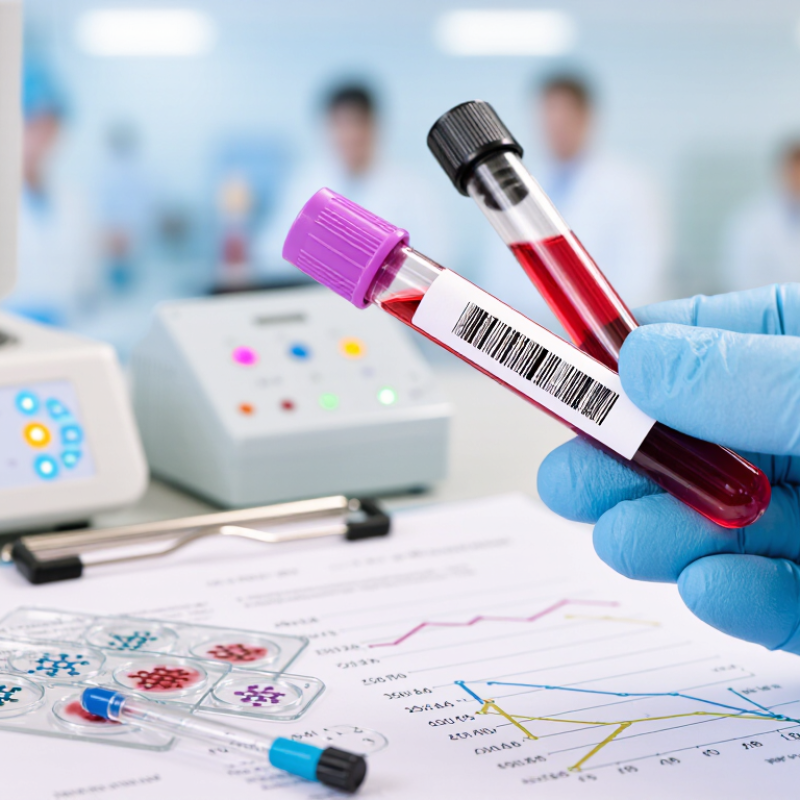
China Top Blood Test to Detect Alzheimers Disease?

China’s Alzheimer’s Burden: 9.83 Million Cases Estimated in 2020 (Lancet)

A Lancet analysis estimated that 9.83 million people in China were living with Alzheimer’s disease in 2020. This is a population estimate, not a count of people confirmed through individual testing. It describes a major health burden, but it should not be mistaken for today’s total. The number reflects a specific year and depends on the study’s data and methods.

Behind such a figure are families noticing repeated questions, missed appointments, or difficulty managing familiar routines. These signs can have different causes, so they do not confirm Alzheimer’s on their own. Blood tests may support assessment, but results need careful interpretation alongside a medical history and clinical evaluation. A single number cannot tell the whole story. Estimates also carry uncertainty.

Tips: If memory changes affect daily life, write down when they began and what has changed. Bring that record to a qualified health professional. Ask what a test can—and cannot—show before relying on its result.

How Blood Biomarkers Detect Alzheimer’s: Amyloid, Tau, and p-tau217

A blood test cannot read a person’s memory or diagnose Alzheimer’s on its own. It looks for biological clues circulating in a small tube of blood. Amyloid proteins can build up in the brain, while tau changes as disease processes affect nerve cells. Blood biomarkers offer a less invasive way to investigate these changes.

Among these markers, p-tau217 has drawn particular attention. Higher levels may be associated with Alzheimer’s-related brain changes, and testing can help clinicians assess whether further evaluation is appropriate. Amyloid measures may add another piece of evidence. No single result tells the whole story. Symptoms, medical history, and cognitive testing still matter.

A result is a clue, not a verdict. In some cases, clinicians may recommend additional assessment, such as brain imaging or cerebrospinal fluid testing. Interpretation also deserves care: other health conditions and differences between tests can affect results. A neat number on a report can feel reassuring, or alarming. It may still leave important questions unanswered. When discussing testing, patients should ask what the result can—and cannot—show.

Some Plasma p-tau217 Studies Report Over 90% Accuracy

Some plasma p-tau217 studies have reported accuracy above 90% when distinguishing people with Alzheimer’s-related brain changes from comparison groups. The test measures a form of tau protein in blood. A small tube of blood may offer clues that once required more involved testing. That is promising. But “over 90%” does not mean every result is correct.

Accuracy depends on who was tested, how researchers defined disease, and which comparison method they used. A study with clearly separated groups may produce stronger results than a busy clinic, where symptoms overlap and other conditions complicate interpretation. Sensitivity and specificity also describe different things; one headline number can blur that distinction. The details matter.

A p-tau217 result should be read alongside symptoms, medical history, and, when appropriate, further evaluation. It cannot by itself explain memory changes or replace a clinician’s judgment. Researchers still need to test how well the blood test performs across different ages and health backgrounds. I would want to see those real-world results before treating a striking percentage as a settled answer.

Comparing China’s Blood Tests: Evidence, Validation, and Regulatory Status

A blood test for Alzheimer’s disease can look simple: one tube, a short wait, a number on a report. The evidence behind that number is more complicated. Tests measuring phosphorylated tau, amyloid-beta ratios, or related markers may help identify people who need further assessment. Their accuracy depends on the assay, the patient group, and the clinical question. Promising results in a research cohort do not guarantee the same performance in every clinic. Context matters.

Validation should include comparison with established assessments, such as cerebrospinal-fluid testing or amyloid imaging, and testing in diverse populations. Age, kidney function, other illnesses, and sample handling can affect results. Small differences matter. A test may support evaluation, but should not be treated as a diagnosis by itself. I would want to see independent studies, clearly reported sensitivity and specificity, and evidence from real-world clinical settings before calling any option “top.”

Regulatory status also needs careful checking. In China, authorization depends on the specific test, its intended use, and the wording of its approved labeling; research availability is not the same as clinical approval. Patients and clinicians should verify current information through official regulatory records and discuss results with a qualified healthcare professional. The evidence is moving quickly, and some uncertainty remains. That deserves plain language, not hype.

Clinical Pathway: Blood Tests Triage; PET or CSF Can Confirm Biomarkers

A blood test may help flag biological signs linked to Alzheimer’s disease, but a positive result does not diagnose it on its own. In a clinical pathway, blood tests are used for triage. They can help clinicians decide who may need more detailed testing. That distinction matters.

Blood-based biomarkers measure specific proteins associated with disease processes. Results can vary with the test used and the person’s health. Age and other illnesses may also affect interpretation. A clinician should consider symptoms, medical history, and test findings together. A lab number alone cannot explain why someone is forgetting names or losing track of familiar routes. Real life is messier.

When symptoms and blood results warrant further investigation, PET imaging or cerebrospinal fluid testing can help confirm relevant biomarkers. PET scans can show patterns of abnormal protein buildup in the brain. CSF testing checks biomarker levels in fluid collected around the brain and spinal cord. These tests bring costs, access limits, and practical burdens, so they are not necessary for everyone. Choosing the next step calls for a clinician’s judgment, not a blood result viewed in isolation.