
Choosing an Alternating Pressure Mattress involves more than comparing prices or counting air cells. The mattress needs to fit the bed, support the user’s weight, and work with their care routine. Its pump cycles air through different sections, changing pressure points over time. Some users find this helpful; others may need time to adjust.
Small details matter. Noise matters. So does setup. A pump’s hum can seem louder in a quiet bedroom, while a complicated controller may frustrate a tired caregiver. Cover material, mattress height, weight capacity, and backup plans during power interruptions also deserve attention. Product features vary, and marketing claims do not guarantee comfort or clinical suitability.
This guide reviews ten options for 2026, focusing on practical features, stated specifications, and the needs buyers commonly weigh. It is not a substitute for an individual assessment. People with limited mobility, fragile skin, or existing pressure injuries should ask a qualified clinician which support surface is appropriate. The most expensive model is not automatically the best choice. Fit and daily usability can matter more. And sometimes, the right answer takes a little trial and reflection. Check current product details, warranty terms, and compatibility before buying; specifications and availability can change.
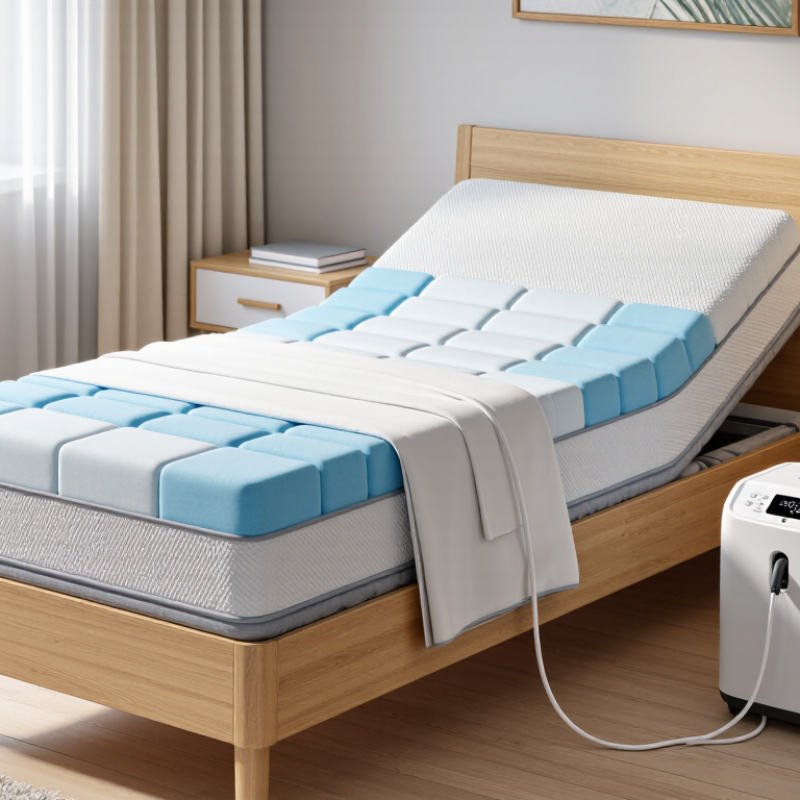
Alternating pressure mattresses use an electric pump to inflate and deflate groups of air cells in a repeating cycle. As one set firms, another softens, changing where the body rests against the mattress. This movement can help spread pressure over time, especially around areas such as the heels, hips, and tailbone. It does not remove pressure completely.
The pump runs continuously, sending air through narrow tubes to the mattress cells. Cycle speed and firmness vary by model, and the right settings depend on the person’s needs. A clinician can help assess them. Keep checking the skin. Redness, warmth, or soreness needs attention, even when the mattress is in use.
Some people notice the shifting surface right away. Others barely feel it. The quiet pump may still hum in a small bedroom, and the motion can disturb sleep. That trade-off is easy to overlook. An alternating mattress also does not replace repositioning or routine skin care. If it loses power, the cells may stop cycling, so caregivers should know what to do next.
| 10 Best Alternating Pressure Mattresses for 2026? - How Alternating Pressure Mattresses Work | |||||
|---|---|---|---|---|---|
| A brand-free comparison of common alternating-pressure mattress configurations. “Best” depends on the person’s pressure-injury risk, mobility, bed, and care plan; this is not a clinical ranking. | |||||
| No. | Configuration | How it works | Often considered for | What to check | Practical note |
| 01 | Full replacement alternating-pressure mattress | An air-cell mattress replaces the usual mattress. A pump alternately inflates and deflates groups of cells to redistribute supporting pressure. | People at elevated pressure-injury risk who spend extended periods in bed, when selected as part of a care plan. | Bed-frame compatibility, patient weight limits, cell layout, setup instructions, and alarm functions. | Designed as a complete mattress system; confirm whether a separate base mattress is required. |
| 02 | Alternating-pressure overlay | A powered air-cell layer sits on top of a compatible mattress and cycles pressure between cell groups. | Situations where an overlay is appropriate and the existing mattress and bed remain suitable. | Overlay dimensions, attachment method, stability, height added to the bed, and compatibility with the underlying surface. | An overlay does not automatically make an unsuitable or damaged mattress safe to use. |
| 03 | Alternating pressure with low-air-loss function | Alternating cells redistribute pressure; airflow through or around the mattress surface may help manage heat and moisture. | People whose care assessment identifies both pressure redistribution and support for skin microclimate management. | How airflow is delivered, cover breathability, moisture-management instructions, and cleaning requirements. | Low-air-loss features do not replace regular skin checks or moisture and continence care. |
| 04 | Alternating system with a removable, breathable cover | The pump cycles air cells beneath a fitted cover; the cover is intended to protect the mattress while allowing appropriate airflow. | Care settings where routine cleaning and cover handling are important. | Whether the cover is removable, approved cleaning methods, seam placement, and replacement guidance. | Use only covers and laundering methods approved for the specific mattress system. |
| 05 | Wide or bariatric alternating-pressure system | A wider mattress system uses alternating air cells to redistribute pressure across its supported surface. | People who need a wider sleeping surface or a higher load capacity than a standard system provides. | Rated weight capacity, usable width, bed-frame capacity, transfer space, and caregiver access. | Confirm the capacity of the mattress, bed frame, and related equipment as a complete setup. |
| 06 | Alternating system with selectable cycle settings | The pump changes which cell groups are inflated over a repeating cycle; some systems offer more than one cycle setting. | Care teams that need settings adjusted under the guidance of a qualified clinician. | Available settings, default setting, control clarity, and instructions for changing settings safely. | There is no single cycle setting that is suitable for everyone; follow the device instructions and care plan. |
| 07 | Alternating system with adjustable pressure controls | Pump output is adjusted to support the person while the system continues its alternating inflation pattern. | Situations where the support level needs to be tailored to the person and mattress design. | Adjustment range, weight guidance, comfort checks, and whether changes should be made by trained staff. | Too little or too much support can affect comfort and positioning; use the manufacturer’s guidance. |
| 08 | Alternating system with heel-focused pressure relief | The mattress may include cell design or positioning features intended to reduce pressure around the heel area while the system cycles. | People whose individual assessment identifies the heels as an area needing particular attention. | Whether the heels are actually suspended or merely supported, positioning instructions, and skin-monitoring needs. | A mattress feature is not a substitute for clinician-directed heel offloading when that is required. |
| 09 | Alternating system with a static or nursing mode | Some pumps allow the alternating cycle to pause or provide a more stable surface temporarily for care tasks. | Care routines that require a stable surface for repositioning or other bed-based tasks. | How the mode is activated, its time limit, alarm behavior, and how to return to alternating operation. | Check that the system is returned to the prescribed operating mode after care tasks. |
| 10 | Alternating system with power-failure alarm or backup provision | The mattress relies on a powered pump to inflate and cycle its cells; some systems include alarms or a specified backup procedure. | Environments where staff need clear notification and instructions if power or pump operation is interrupted. | Alarm type, battery availability if applicable, backup duration if specified, and emergency instructions. | Do not assume a battery backup is included; verify the exact system’s documentation. |