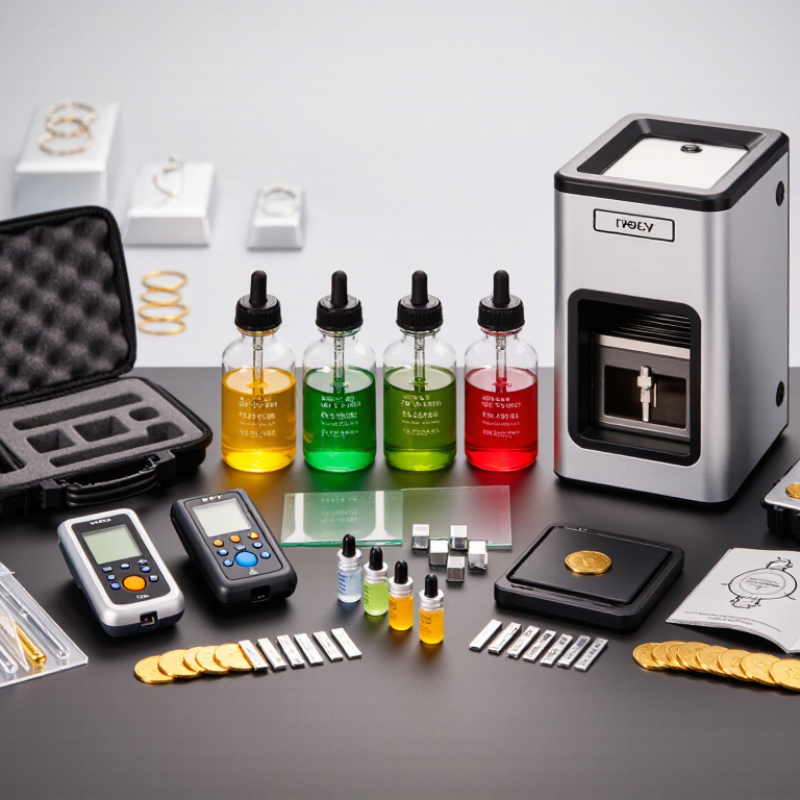
| Gold Acid Test Kit | Touchstone, testing needles, acids commonly calibrated for 9K, 10K, 14K, 18K, 22K and 24K gold, dropper bottles, gloves and instructions | Gold jewelry, small bars, scrap and plated items | Usually identifies an approximate karat range when the test is performed correctly | 2–5 minutes per item | Low-cost screening and field checks | Tests only the scratched area; thick plating, solder, coatings and layered construction may produce misleading results |
| Silver Acid Test Kit | Silver testing solution, test stone, comparison chart, applicator and protective gloves | Sterling silver, coin silver, higher-purity silver and silver-plated items | Useful for distinguishing common silver grades when combined with visual and physical checks | 2–5 minutes per item | Screening flatware, jewelry, decorative objects and scrap | Cannot reliably determine the full composition of alloys or detect all plating thicknesses |
| Electronic Gold Tester | Digital meter, probe, conductive solution or testing fluid, calibration accessories and power supply | Gold jewelry and selected precious-metal alloys | Provides an indicative reading; accuracy depends on calibration, surface condition and alloy type | 30 seconds–2 minutes per item | Repeated non-destructive screening in retail or purchasing environments | Readings can be affected by moisture, dirt, temperature, geometry and plated surfaces |
| Electronic Silver Tester | Digital instrument, probe or sensor, reference solution and calibration guide | Silver alloys, jewelry, flatware and selected scrap forms | Suitable for comparative screening rather than definitive laboratory certification | 30 seconds–2 minutes per item | Fast checks where surface damage should be minimized | Cannot replace laboratory analysis for complex alloys, hollow objects or plated products |
| Magnet and Density Test Set | Strong magnet, precision scale, measuring container, distilled water, calipers and calculator or density chart | Solid, non-porous gold and silver objects with measurable volume | Good for detecting some base-metal substitutes; density alone is not proof of purity | 5–10 minutes per item | Non-chemical preliminary screening | Hollow, stone-set, irregular, wet or layered items can produce inaccurate density calculations |
| Precious-Metal Test Kit with Touchstone | Dark testing stone, reference needles, multiple acids, neutralizing material and cleaning accessories | Gold, silver and sometimes platinum-group metals, depending on the acid set | More informative than a single-acid test when reference standards are used correctly | 5–10 minutes per item | Professional field screening and second-hand goods evaluation | Requires practice; acids are hazardous and may damage the test area |
| X-Ray Fluorescence Analyzer | X-ray source, detector, software, calibration standards and safety enclosure or controls | Gold, silver, platinum-group metals and many additional alloying elements | Rapid surface and near-surface elemental analysis; results depend on calibration and sample geometry | 10–60 seconds per reading | High-volume, non-destructive composition screening | Higher purchase cost; surface plating and inhomogeneous objects may affect results; trained operation is required |
| Fire Assay / Laboratory Analysis | Laboratory sampling, fusion equipment, cupels and analytical instruments; normally performed by a qualified laboratory | Ore, concentrates, bullion, scrap and high-value precious-metal materials | Reference-grade quantitative analysis when sampling and laboratory procedures are properly controlled | Several hours to several days | Trade settlement, certification and dispute resolution | Destructive, more expensive and unsuitable for routine testing of finished jewelry |