
facebook tracking

2026 Best Pipe End Chamfering Machine for Sale

A clean bevel can decide whether a pipe fits, welds, and moves smoothly through the next production stage. In 2026, buyers comparing a Pipe end Chamfering Machine should look beyond its advertised cutting speed. Check the pipe diameter range, bevel angle, wall-thickness capacity, clamping method, tool life, and changeover time. Watch a sample cut, too. A bright edge is not enough if the bevel varies or the pipe slips under load.

The World Steel Association’s World Steel in Figures 2024 reports that global crude steel production reached 1,892.2 million tonnes in 2023. That scale gives useful context: consistent pipe preparation matters across a vast steel supply chain, though steel output alone does not predict demand for chamfering equipment. On the shop floor, operators also judge chip control, noise, repeatability, and how quickly they can reset the machine between jobs. Small details count.

A named, independently verifiable quotation from a pipe-end chamfering specialist was not available for this introduction, so no expert quote is invented. That limitation deserves notice. Buyers should confirm performance through documented specifications, sample testing, and service references. The right machine is the one that fits the actual pipe mix—not just the catalogue photo.
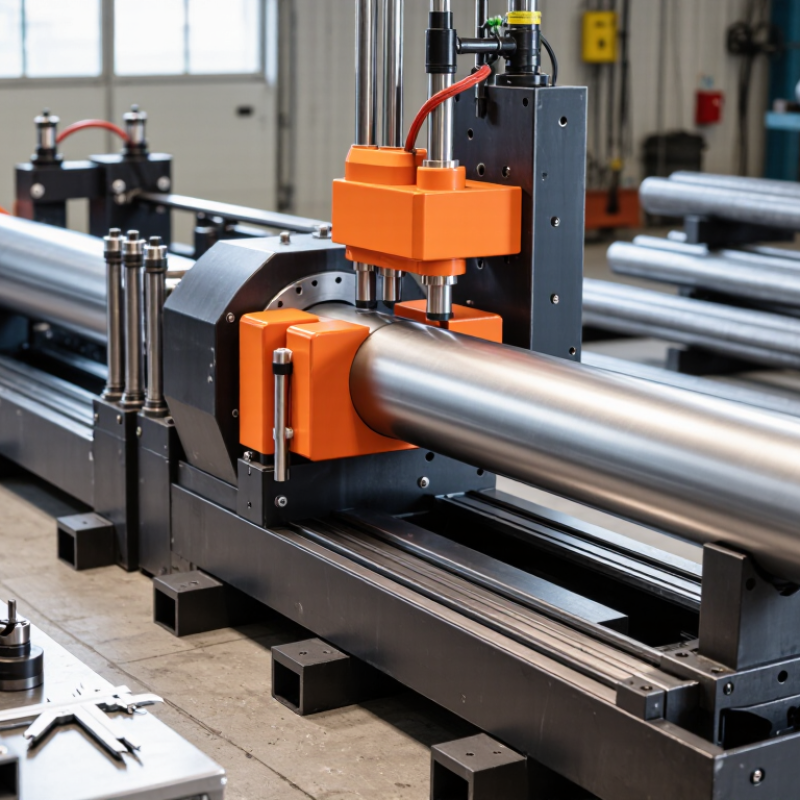
2026 Best Pipe End Chamfering Machine for Sale

What Is a Pipe End Chamfering Machine?

A pipe end chamfering machine prepares the edge of a pipe by cutting a sloped surface, often called a bevel, around its end. It can also remove burrs left by sawing. The result is a more even edge for fitting or welding. On a shop floor, that means fewer sharp metal fragments and a clearer joint profile.

The machine usually holds the pipe with a clamp while a cutting head shapes its edge. Depending on the design, the tool or the pipe may rotate. Operators set the tooling and feed to suit the pipe’s diameter, wall thickness, and material. A small stainless-steel tube needs a different setup from thick carbon-steel pipe. Check the machine’s capacity and clamping range before buying. Also inspect how easily cutters can be changed and how securely the pipe stays in place. In practice, the first setup is rarely perfect. A test cut helps reveal chatter, uneven bevels, or excess material removal. Not quite right? Adjust the feed or tooling, then check the edge again. A consistent chamfer is useful, but it does not replace proper joint fit-up or a suitable welding procedure.

2026 Best Pipe End Chamfering Machine for Sale — What Is a Pipe End Chamfering Machine?

A pipe end chamfering machine cuts a bevel or chamfer at the end of a pipe to prepare it for welding or assembly. Use the pipe’s actual outside diameter—not its nominal pipe size alone—to check whether a machine’s stated capacity is suitable.

The chart shows outside diameters for selected NPS sizes in millimeters, based on ASME B36.10M dimensions. These are pipe dimensions, not machine-capacity ratings; confirm the machine’s supported diameter range and wall thickness before purchase.

How Pipe End Chamfering Machines Work

2026 Best Pipe End Chamfering Machine for Sale

How Pipe End Chamfering Machines Work

A pipe end chamfering machine shapes the pipe’s open edge into a sloped surface. This edge can help prepare parts for welding or assembly. The operator secures the pipe with a clamp, then positions the cutting tool against its end. On many machines, a rotating cutter removes material as it moves around the pipe. Other designs rotate the pipe instead. The exact motion depends on the machine. The result should be an even bevel, without sharp burrs or obvious uneven spots.

Before cutting, the operator sets the bevel angle and adjusts the tool for the pipe’s size and wall thickness. A trial cut on a sample piece can reveal alignment or depth problems. It is easy to overlook that step when production is busy. After machining, check the edge visually and measure it against the job requirements. A smooth edge helps. When comparing machines for sale, consider the pipe diameter range, adjustment method, clamping stability, and expected workload. A fast cycle time matters, but consistent results matter more. The setup may still need fine-tuning.

Which Features Matter When Choosing a Machine

2026 Best Pipe End Chamfering Machine for Sale
Which Features Matter When Choosing a Machine

Choosing a pipe end chamfering machine starts with the workpiece. Check its diameter range, wall thickness, material, and required bevel angle. A machine that handles your smallest and largest pipes may still struggle with thin-wall stainless steel. Ask for a cutting test using your own material. Inspect the edge for burrs, heat marks, and a consistent bevel. Small flaws matter.

Clamping and adjustment affect both safety and repeatability. Look for secure, quick-adjust fixtures and clear controls. Confirm whether the cutting head suits your production volume, and ask how often its tooling needs replacement. Deloitte and MAPI’s 2019 smart factory study found that 86% of manufacturers viewed smart factory initiatives as a future competitiveness driver. That broad survey is not specific to chamfering, but it supports considering useful production data features. A screen alone is not enough. Check whether the machine records cycle counts or flags maintenance needs, and verify the records are easy to retrieve.

Tips: Request a live demonstration. Time a full changeover, not just one cut. Check noise, chip collection, and access to routine service points. I would not choose on speed alone; real shop conditions can expose gaps in an impressive specification sheet.

How to Compare the Best Machines for Sale in 2026

2026 Best Pipe End Chamfering Machine for Sale

Comparing the best machines for sale in 2026 starts with the pipe you actually process. Record its material, outside diameter, wall thickness, and required bevel before reviewing specifications. A machine suited to thin stainless tubing may struggle with thicker carbon steel. Check the stated capacity against your own production range, not just the largest figure in an advertisement.

Test-cut a representative pipe sample whenever possible. Inspect the edge for burrs, consistent angles, and a clean finish, then measure cycle time across several pieces. One perfect cut proves little. Ask how operators adjust tooling, secure different pipe sizes, and clear chips. If setup requires repeated trial and error, that lost time can outweigh a low purchase price. I once underestimated changeover time; the estimate looked tidy, but the shop floor told a different story.

Compare the full cost of ownership, including tooling, maintenance, training, and service availability. Request details on replacement parts and expected maintenance intervals, and confirm what the warranty covers in writing. Also consider floor space, power requirements, guarding, and how easily the machine fits your workflow. A quieter, simpler model may suit a small shop better than a faster unit that needs constant supervision. Ask the seller to demonstrate your material and document the settings used.

2026 Best Pipe End Chamfering Machine for Sale — How to Compare the Best Machines for Sale in 2026
Machine Type Best Suited For Typical End-Preparation Work Workpiece Considerations Main Advantages Trade-Offs What to Confirm Before Purchase
Portable, split-frame machine On-site maintenance, repair, and work on installed pipe where moving the workpiece is impractical. Depending on the tooling, can perform external or internal chamfering, beveling, and end facing. Check the machine’s stated pipe outside-diameter range, available clamping inserts, wall-thickness limits, and clearance around the pipe. Can be fitted around fixed pipe; avoids transporting large or installed workpieces to a stationary shop machine. Setup and alignment are important; access, clamping conditions, and the operator’s skill can affect results. Request a demonstration on the actual pipe material and dimensions. Verify power requirements, tool availability, and whether the quoted tooling covers the required operation.
Stationary, single-station chamfering machine Workshops producing repeat chamfers on a defined range of pipe or tube sizes. Primarily repeatable edge chamfering or deburring; some configurations also provide facing or other end-preparation operations. Capacity depends on the chuck, tooling, machine layout, and pipe geometry. Confirm both the minimum and maximum workpiece sizes. Dedicated setup can make routine jobs straightforward and repeatable when parts and requirements are consistent. Less adaptable if jobs vary widely; changing sizes or operations may require tool changes and setup time. Check clamping method, adjustment range, cycle controls, tool-change procedure, guarding, and sample-part finish.
Automatic or CNC end-preparation machine Production environments with recurring jobs, documented settings, and a need for consistent processing. May combine programmed feed with chamfering, facing, or multiple cutting operations; the actual capability depends on the machine configuration. Confirm the supported material, pipe dimensions, wall thickness, and any limits on length, weight, or end geometry. Stored settings and controlled cycles can reduce variation between repeated jobs when the machine is correctly set up. Higher automation can add cost and setup complexity; it may be unnecessary for low-volume or frequently changing work. Ask for cycle-time data for your part, control and safety details, service support, training, and a test run using your material.
Multi-function pipe end-preparation machine Shops that need more than one operation, such as chamfering plus facing or bevel preparation. Can handle several end-preparation tasks when the machine has the correct heads, tooling, and operating range. “Multi-function” does not mean every operation is included. Check compatible tools and capacity for each required process separately. Can consolidate operations and reduce workpiece transfers between separate machines. Tooling changes and setup can take time; a broader capability may not outperform a dedicated machine on a single repetitive task. Get a written list of included operations, tooling, supported materials, changeover steps, and achievable edge geometry.
High-volume, automated production cell Repetitive manufacturing where loading, clamping, machining, and unloading can be organized into a controlled production flow. Typically configured around specified end-preparation operations and a defined part family; automation options vary by supplier and layout. Requires a clear specification for part sizes, material, tolerances, production volume, and how parts enter and leave the cell. Can support consistent, repeatable production and reduce manual handling when integrated and maintained appropriately. Requires space, integration planning, operator training, and a suitable production volume to justify the investment. Request a complete system proposal covering guarding, material handling, installation, acceptance testing, maintenance, and confirmed output for your parts.

Comparison note: These are machine categories, not verified live product listings or manufacturer-specific specifications. Pipe capacity, accuracy, cycle time, and available operations vary by model, tooling, material, and setup. Obtain a written specification and confirm performance with a sample cut before ordering.

What to Check Before Buying and Operating a Machine

2026 Best Pipe End Chamfering Machine for Sale

Before buying, match the machine’s stated capacity to your actual pipe sizes, wall thicknesses, and chamfer angles. A sample cut can reveal more than a brochure. Ask the seller to process your material and inspect the edge for burrs, uneven bevels, and heat marks. Check whether the clamping system holds thin-wall pipe without denting it. Confirm which tooling is included and how often it needs replacement. Small details matter.

Look closely at guarding, emergency stops, chip control, and access for routine cleaning. Read the operating instructions before arranging the machine on the shop floor. Leave enough room to load long pipe safely. During setup, verify alignment and secure the workpiece before starting the spindle. Keep hands clear of rotating parts. Run a test piece at a conservative feed rate, then adjust one setting at a time. It may feel slower.

Noise and vibration deserve attention, too. A machine that cuts well during a brief demonstration may behave differently over a full shift. Ask about its recommended duty cycle, maintenance schedule, and commonly replaced consumables. Record the settings that produce a clean edge for each pipe type. In practice, operators may skip this step when jobs are rushed; that makes repeatability harder. Recheck the first few parts after any tooling change.